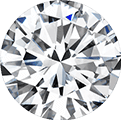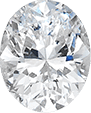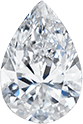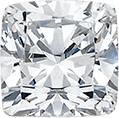
What Does G/H Colour Mean on a Ring Listing?
G/H means the stone sits somewhere in the near-colourless band, not at one fixed grade. It is a range, so ask which of the 2 letters yours actually is.
G/H colour on a ring listing means the diamond falls somewhere in the near-colourless band, at either G or H, rather than at one fixed letter. It is a range, not a grade. Sellers quote 2 letters when a stone has not been individually certified, or when small accent stones are sold as a matched batch.
Why do listings quote 2 letters instead of 1?
Listings quote 2 letters because the seller is describing a band of colour rather than one graded stone. A single letter is a claim about one specific diamond, and it has to be backed by a certificate with that stone’s own measurements on it. A pair of letters is a promise that whatever stone you receive will sit inside those two grades. It is a normal trade practice, not a trick, but it does mean the description is looser than it looks.
Two letters usually appear for one of three reasons: the ring is made to order and the exact stone has not been chosen yet, the stone is too small for individual certification, or the seller holds a parcel of matched stones and sells them by band. Our guide to how many colours diamonds come in sets out the wider scale these letters sit on.
What is the difference between a G and an H in the hand?
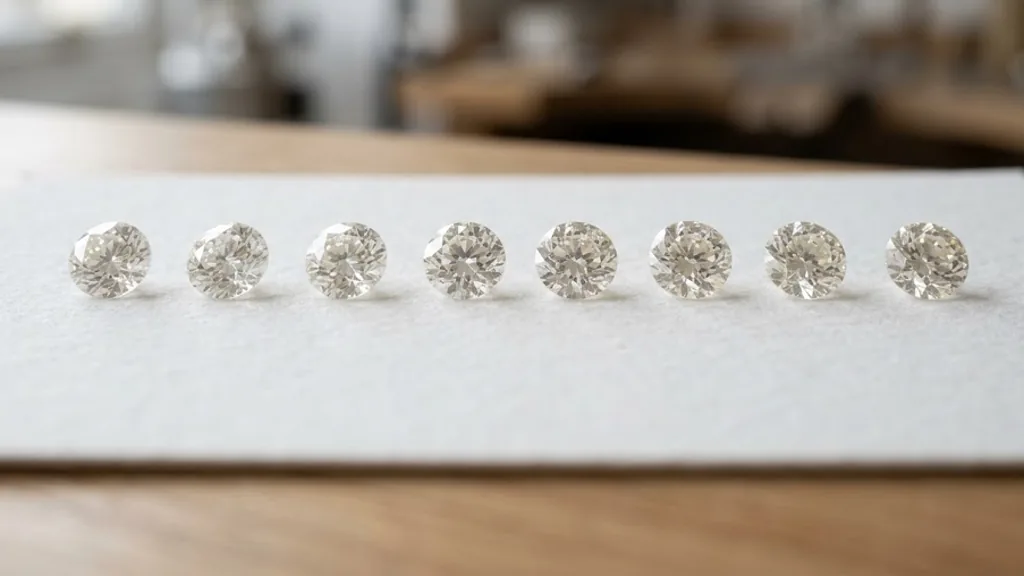
The difference between a G and an H in the hand is one step, and it is very hard to see. Both sit in the near-colourless band, both face up white in a finished ring, and the warmth that separates them is easiest to spot with the stones loose, upside down, on a white card. Set in metal, viewed from above, in ordinary daylight, most people cannot pick which is which.
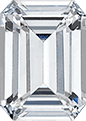
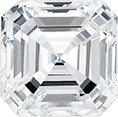
Where the step does start to show is on a big stone, in a step cut such as an emerald or Asscher, and against platinum or white gold. If you want the detail on either letter, we have a page on what a G colour diamond looks like and another on whether an H colour diamond looks yellow. Neither is the wrong answer.
Which stones in a ring does the range describe?
The range quoted on a ring listing describes the centre stone first, and the smaller accent stones second, and the two are often not held to the same standard. A centre stone above roughly 0.30 ct is usually certified on its own and has one real letter. The pavé, halo or side stones around it are melee, which means very small diamonds bought and sold in parcels rather than one at a time.
Melee is where a two-letter description does the most work. Nobody certifies a 1.2 mm diamond individually; it is not economic and the report would cost more than the stone. Instead the parcel is matched by eye and by machine to a band such as G/H, and the setter picks stones from it so that the accents match each other. That matching matters more than the letter, because a mismatched accent is visible when the letter is not.
The table below is the short version: what each kind of listing wording actually promises, and the one question that turns it into a fact.
| What the listing says | What it actually promises | What to ask |
|---|---|---|
| G/H | Near-colourless: the stone is a G or an H | Which letter is on the certificate? |
| E/F | Colourless: the stone is an E or an F | Which letter is on the certificate? |
| G/H VS | A colour range and a clarity range together | Are both ranges, or is one fixed? |
| G/H accent stones | Melee matched within a band, not graded singly | Is the centre stone certified on its own? |
Should you ask which letter your stone actually is?
Ask which letter your stone actually is, every time, because the question costs nothing and the answer is either on a certificate or it is not. A seller with a certified centre stone will tell you in one line and send the report number. A seller who cannot tell you is describing a stone that has not been chosen or graded yet, which is fine as long as you know that is what you are buying.
The follow-up question is just as useful: will the certificate be issued for the stone in my ring, or for a stone like it? Every centre stone we set comes with its own free IGI certificate, so the letter on paper is the letter in the ring. If you are weighing the warmer grades further down the scale, our guide to whether an L or M diamond looks yellow covers where visible warmth genuinely begins.
How is a lab-grown stone’s colour reported now?
Lab-grown diamond colour is now reported in two different ways, and which one you see depends on the laboratory. IGI still grades lab-grown stones on the familiar D to Z colour scale, so an IGI report for a lab-grown diamond names a single letter exactly as it always did. That is the scale a G/H listing is referring to, and it is the scale our certificates use.
GIA changed its approach on 1 October 2025 and stopped issuing D to Z colour grades and IF to I3 clarity grades for lab-grown diamonds. A lab-grown stone submitted to GIA now receives an overall assessment described as Premium or Standard instead of separate letters. Our guide to how GIA now reports lab-grown diamonds sets out what changed and why we certify with IGI.
The practical consequence is small but worth knowing. If a listing quotes G/H for a lab-grown stone and says the report is from GIA, something does not add up, and that is a fair thing to query before you pay.
What should you check before you buy a two-letter stone?
Before you buy a stone sold under a two-letter colour range, check three things and you have covered nearly all of the risk. Check whether the centre stone is certified in its own right and by which laboratory. Check whether the accent stones are matched to each other, which is what you will actually notice. Then check the metal, because yellow and rose gold hide a step of warmth that white metal shows.
None of this means a range is a bad buy. A G/H stone in a solitaire is a sensible, well-judged choice that most buyers would not improve by paying for a letter higher, and the money saved usually does more good spent on cut or on carat weight. Our guide to what keeps lab-grown prices where they are explains where that money actually goes.
Everything we make is hand-made in solid gold or platinum in our North Harrow workshop, and every centre stone carries a free IGI certificate with one letter on it. A solitaire oval cut engagement ring at 557 pounds shows a single certified stone with nothing around it to match.
Where accent stones are involved, matching is the thing to look at. A vintage round cut ring in yellow gold at 1,051 pounds carries pavé stones set by hand, and a solitaire round cut engagement ring at 657 pounds carries none at all. Prices correct at the time of writing; the rest are in our engagement ring collection.
Frequently asked questions
Is G/H colour good enough for an engagement ring?
Yes. G and H both sit in the near-colourless band, and a stone at either letter faces up white once it is set in a ring and seen from above. The step between them is smaller than the step between two lighting conditions in the same room. Spend the difference on cut quality instead, which you will see every day.
What does E/F mean on a listing?
E/F means the stone sits in the colourless band, at either an E or an F, one step above the near-colourless letters. It is the same kind of range as G/H, simply higher up the scale and dearer. The same question applies: ask which single letter appears on the certificate for the stone you are actually buying.
Does a colour range appear on the certificate?
No. A laboratory report describes one specific stone and gives it one colour grade, so a certificate never says G/H. The range lives in the seller’s listing, not in the paperwork. If you are shown a report with a single letter, that letter is the answer, and the listing wording stops mattering from that point on.
Is G/H the same as the near-colourless range?
No, not quite. The near-colourless band on the D to Z scale runs G, H, I and J, so G/H is the top half of it rather than the whole thing. A listing that says near-colourless without naming letters could mean any of those four grades, which is a wider promise than G/H and worth pinning down.
Why do two G/H rings look different to each other?
Cut, metal and accent matching account for most of it. One ring may hold a G and the other an H, but a difference you can see across a room is far more likely to come from how well the stone is cut, whether it sits in yellow or white metal, or whether the small stones around it are matched to each other.
Does IGI still use the D to Z colour scale?
Yes. IGI continues to grade lab-grown diamonds on the D to Z colour scale and to report a single letter for each stone, which is why our certificates are IGI. GIA took a different route for lab-grown stones on 1 October 2025 and now gives an overall assessment of Premium or Standard rather than separate letters.
Ready to find your perfect ring?
Explore our lab-grown diamond collection or book a virtual appointment with our team.