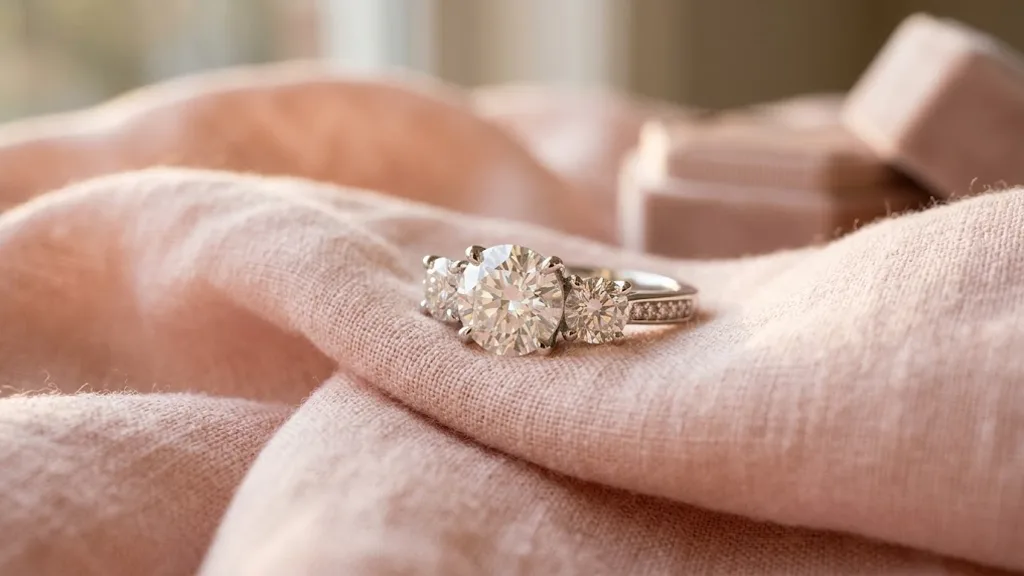
A side stone engagement ring sets smaller diamonds beside one centre stone. Each side stone is usually a fraction of the centre, such as 0.25 ct beside 1 ct.

CarbonstoneUK is a UK jeweller based in North Harrow, London, hand-making lab-grown diamond engagement rings and wedding rings in solid gold and platinum.
A side stone engagement ring sets smaller diamonds beside one centre stone. Each side stone is usually a fraction of the centre, such as 0.25 ct beside 1 ct.
A tiara wedding band has a raised, crown-shaped edge that curves round the stone. Ours is 2.10 mm wide and set with 0.26 ct of lab-grown diamonds.
A five stone ring has no fixed tradition behind it. It is usually given for a milestone such as a 5th anniversary, with the 5 diamonds given personal meaning.
A heart cut diamond makes a good engagement ring if its two lobes match. Choose 0.50 ct or more and protect the point with a V-shaped claw or a halo.
A split shank is a band that splits into two strands near the stone. It widens the top to 4 mm or more and is usually as easy to resize as a plain band.
Milgrain is a row of tiny metal beads, each under 0.5 mm, along a ring’s edge. It wears slowly over years, and a jeweller can usually restore it.
A lozenge cut diamond is a long four-sided rhombus shape. A 1 ct lozenge is about 9.85 x 6.40 mm, much longer than a 6.5 mm round of the same weight.
No. A halo frames one centre diamond with 1–1.5 mm stones, while a cluster groups several similar stones into one shape. Here is how they differ.
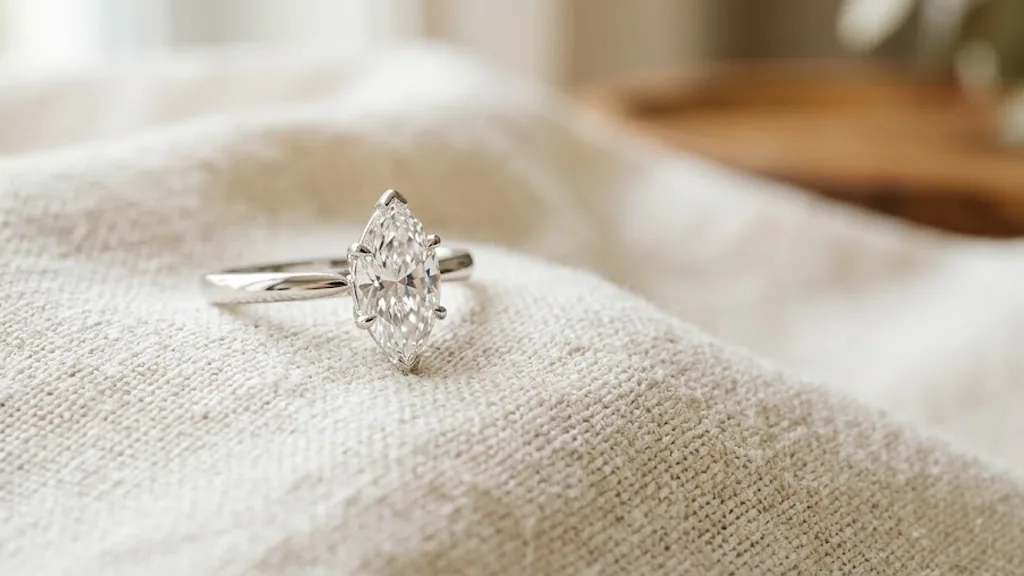
A marquise cut diamond is a long brilliant cut with a point at each end. A 1 ct stone measures about 10 x 5 mm, so it looks bigger than a 1 ct round.
Engagement ring insurance in the UK is priced from the ring’s replacement value. A common rule of thumb is 1.5% to 3% a year, but always get your own quote.
You cannot copy content of this page
Join our list for early access to new collections, and unlock your welcome code — plus complimentary gift packaging.