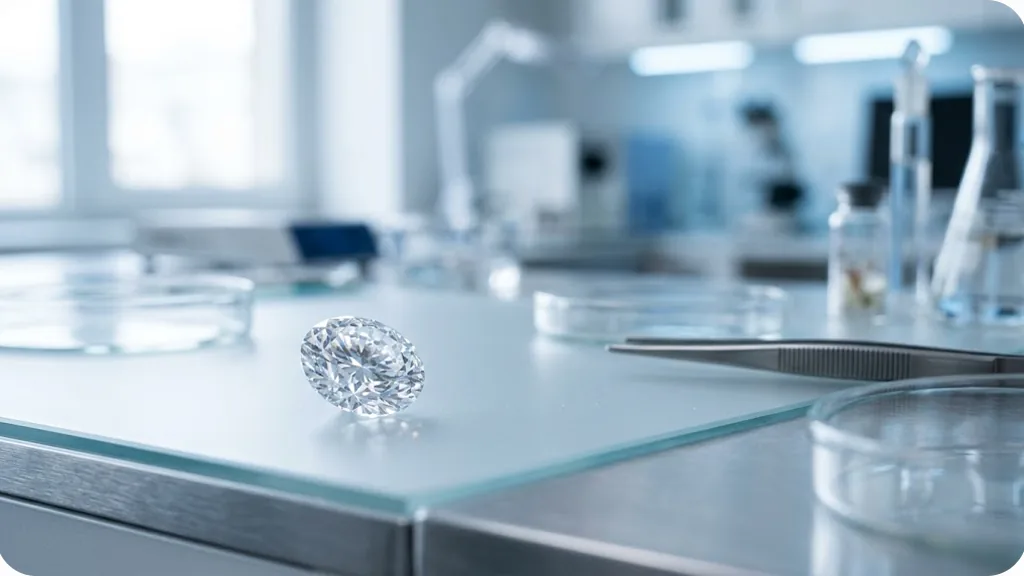
Yes, no mine is involved, so a lab-grown diamond cannot be a blood diamond. But conflict-free is not a certified claim. What the Kimberley Process misses.

CarbonstoneUK is a UK jeweller based in North Harrow, London, hand-making lab-grown diamond engagement rings and wedding rings in solid gold and platinum.
Yes, no mine is involved, so a lab-grown diamond cannot be a blood diamond. But conflict-free is not a certified claim. What the Kimberley Process misses.
Shape is the outline, cut is the quality. Every diamond shape compared, what we stock, and how to match a shape to a hand.
Diamond colour runs D to Z, colourless to tinted. The full scale, what each grade looks like, fluorescence and which to buy.
A promise ring marks a serious commitment that is not an engagement. Meaning, which finger, cost, metals and styles explained.
A portrait cut diamond is a very thin, flat slice you see straight through. What it looks like, how it wears, and what we stock instead.
A diamond’s streak is white, or colourless. Why the streak test cannot be done on diamond, and which tests actually identify one.
A J colour diamond is not too yellow for most rings. Where J sits on the D-Z scale, which metals suit it, and when to go higher.
Diamond fluorescence is a diamond glowing, usually blue, under UV light. What causes it, how it is graded, and whether lab-grown diamonds do it.
Lab-grown diamonds were first made repeatably in December 1954. A clear timeline from 1797 to today, and when gem-quality stones arrived.
D is the highest diamond colour grade on the D-to-Z scale. What it means, when it is worth paying for, and why D is common in lab-grown stones.
You cannot copy content of this page
Join our list for early access to new collections, and unlock your welcome code — plus complimentary gift packaging.