Does Colour or Clarity Make a Diamond Sparkle?
Cut creates sparkle, not colour or clarity. Here is exactly what each C changes, and how to spend your budget for the brightest stone.
Ask a jeweller whether colour or clarity makes a diamond sparkle and you will usually get a straight answer that surprises people: neither, really. Sparkle is overwhelmingly the job of the third C — cut. Colour and clarity change how a diamond looks, but cut is what makes light come back out of it.
That said, the question is a good one, because both colour and clarity do influence the impression of brightness in ways worth understanding before you spend money on either.
What “sparkle” actually is
The trade splits sparkle into three separate effects. They are easy to tell apart once you know the names.
| Effect | What you see | What controls it |
|---|---|---|
| Brilliance | Steady white brightness returning from the stone | Cut proportions, polish, clarity if severe |
| Fire | Flashes of rainbow colour | Cut proportions, facet angles |
| Scintillation | The twinkle as the stone or your hand moves | Facet pattern and symmetry |
All three come from the same physical process. Light enters through the top of the diamond, bounces off the angled facets underneath, and exits back towards your eye. If the angles are right, almost everything that goes in comes back out. If they are wrong, light leaks out of the bottom and the stone looks dull, glassy or has a dark “window” in the middle.
This is why a well-cut half-carat can out-sparkle a badly cut one-carat. No colour or clarity grade can rescue leaked light.
Where clarity comes into it
Clarity is a measure of the tiny internal features — inclusions — inside the stone. For sparkle purposes there are really only two situations that matter.
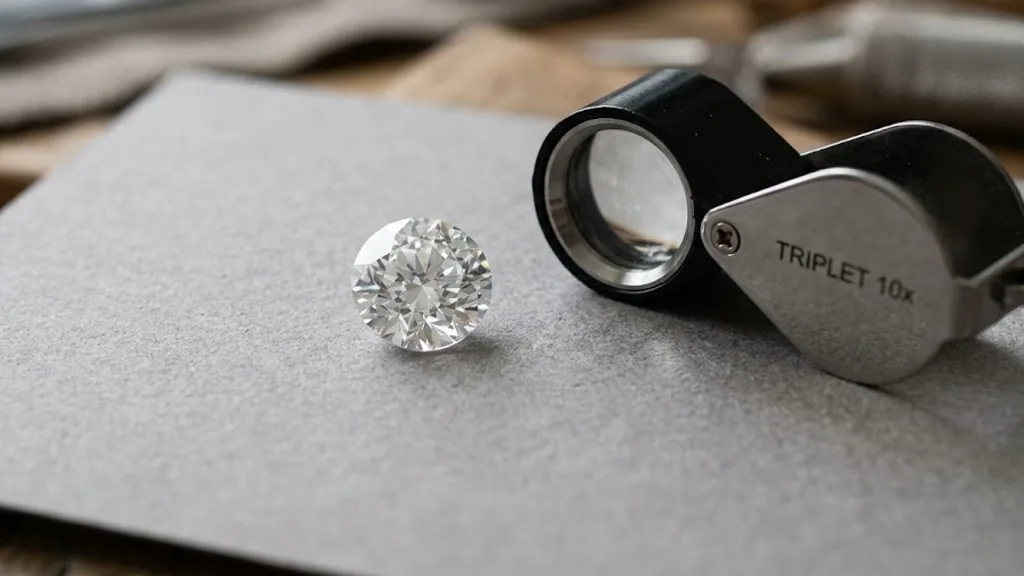
Small, scattered inclusions: no effect. A VS2 or SI1 stone with a few pinpoints and a small feather off to the side returns light exactly like a VVS stone. The inclusions are far too small to intercept a meaningful amount of light. You would need a loupe to know they exist.
Large or hazy inclusions: real effect. Two things genuinely dim a diamond:
- A big cloud — a dense group of microscopic pinpoints — which scatters light and can make a stone look milky or sleepy even though it is “only” graded SI. Clouds are the single most under-discussed clarity problem.
- A large feather or dark crystal sitting under the table, which physically blocks light and shows as a shadow.
So clarity affects sparkle at the bottom of the scale, not at the top. Going from SI2 to VS2 can visibly improve a stone. Going from VS1 to Internally Flawless will not change what anyone can see.
Where colour comes into it
Colour grading measures how little yellow or brown tint a diamond has, from D (completely colourless) down through the alphabet. Here the relationship with sparkle is more subtle and slightly counter-intuitive.
Colour does not reduce brilliance. A K-colour diamond returns just as much light as a D — the light simply comes back with a warm tint. What colour affects is contrast. A colourless stone gives crisp white flashes against dark ones, which reads to the eye as sharper, icier sparkle. A warmer stone gives softer, creamier flashes.
Fire is the interesting exception. Because fire is coloured light, a faint body tint can actually make rainbow flashes slightly harder to distinguish. In practice the difference is small and most people never notice it.
| Colour grade | Description | How it reads on the hand |
|---|---|---|
| D, E, F | Colourless | Icy white; best in platinum and white gold |
| G, H, I, J | Near colourless | Looks white face-up; excellent value |
| K, L, M | Faint tint | Warm; sits beautifully in yellow or rose gold |
The setting metal matters more than the grade difference. A G colour stone in white gold looks noticeably whiter than the same stone in yellow gold, because the metal reflects into the diamond. Conversely, a slightly warm stone set in yellow gold — as in our Vintage Round Cut Engagement Ring in Yellow Gold, £1,051 at the time of writing — looks entirely at home, because the eye reads the whole ring together.
So which one should you prioritise?
If your budget is fixed, here is the order that gives the most visible sparkle per pound. This is the working rule of thumb in the trade rather than a measured figure.
- Cut first, always. Buy Excellent or Ideal cut. Never compromise here.
- Clarity to the point of eye-clean, then stop. Usually VS2 or SI1. Check for clouds specifically.
- Colour to match your metal. G to H for white metals, I to J is perfectly good in yellow or rose gold.
- Carat last. Size is the easiest thing to notice and the easiest to overpay for.
Between colour and clarity specifically: if you must choose, a slightly better colour grade usually gives a more obvious improvement than a slightly better clarity grade — provided the stone is already eye-clean. Colour is something you can see across a room. An SI1 inclusion is not.
Shape changes the answer
Different cuts hide or reveal these two Cs differently, and this is where a lot of buyers waste money.
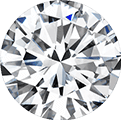
- Round brilliant — the best all-round hider. Hundreds of light bounces disguise both faint tint and small inclusions. You can drop a grade on both.
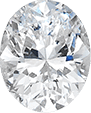
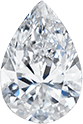
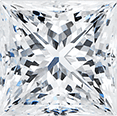
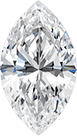
- Oval, pear, marquise — brilliant faceting hides inclusions well, but the elongated shape concentrates colour at the points, so tint shows there first.
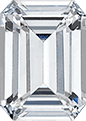
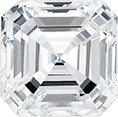
- Emerald, asscher, baguette — step cuts. Long open facets act like windows. Both inclusions and body colour are far more visible, so buy higher on both.
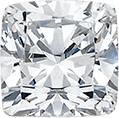
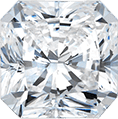
- Cushion, radiant — good at hiding inclusions; radiant cuts in particular tend to concentrate colour and can look warmer than their grade suggests.
- Rose cut — flat-backed with a domed top. Far less sparkle by design; the appeal is a soft glow rather than fire.
If sparkle is your priority, a round brilliant is the shape engineered for it. Our Twisted Round Cut Engagement Ring at £1,007 and Halo Round Cut Engagement Ring at £707 (prices correct at the time of writing) both use that shape, and the halo adds a ring of small stones that increases the total light return of the head.
Does any of this change for lab-grown diamonds?
No. A lab-grown diamond is the same material with the same optical properties, so it obeys the same physics. It is graded on the same colour and clarity scales by the same laboratories.
The practical difference is budget. Because high-grade lab-grown material is not limited by geology, the trade-off between colour, clarity and size is far gentler. Many buyers who would have settled for J colour SI2 in a natural stone find they can have a colourless, eye-clean, excellent-cut lab-grown diamond in the same ring for the same money. Every centre stone we sell comes with a free IGI certificate so you can check all three grades yourself.
Frequently asked questions
Does higher clarity mean more sparkle?
Only up to a point. Moving out of the included grades into eye-clean territory helps. Beyond about VS2 there is no visible gain in sparkle, only in the paperwork.
Will a D colour diamond sparkle more than a G?
It will look whiter and give crisper white flashes, but it does not return more light. Set in yellow gold, most people cannot tell them apart.
Why does my diamond look dull even though the grades are good?
Nine times out of ten it needs cleaning. A film of hand cream, soap and skin oil on the underside of the stone stops light entering. Warm water, washing-up liquid and a soft brush will bring it back. If it is still dull when clean, the cut is the likely culprit.
What is a milky or hazy diamond?
Usually a stone with a large cloud inclusion, or in some cases strong fluorescence. It can carry a respectable clarity grade on paper and still look flat. Always look at the plot diagram for the word “cloud”.
Which matters more for a small diamond?
Cut, by a wide margin. In stones under about half a carat, neither colour nor clarity differences of one or two grades are realistically visible.
See the difference in person
Grades on paper only take you so far. Browse our round cut collection or the full range of engagement rings, all hand-made in solid gold or platinum with free insured UK delivery and 30-day returns.
If you want to go deeper, read our companion guides on how diamond clarity is judged and the best clarity grade for a lab-grown diamond.
Ready to find your perfect ring?
Explore our lab-grown diamond collection or book a virtual appointment with our team.