Diamond Clarity Explained: How to Judge It, Find It and See It Yourself
How diamond clarity works, the five things graders judge, how to find your stone's grade and how to see inclusions yourself.
Clarity is the C that confuses people most. Cut, colour and carat all have something you can see or weigh. Clarity is about things so small you usually cannot see them at all — which raises the obvious question of why you should pay for them.
This guide answers the four things buyers actually ask: how clarity works, how graders judge it, how to find out what your own diamond graded, and how to see the inclusions with your own eyes.
How clarity works with diamonds
A diamond forms from carbon under enormous pressure and heat. Whether that happens under the earth or in a growth chamber, the process is rarely perfect. Tiny features get trapped inside or form as the crystal grows.
Those internal features are called inclusions. Marks on the outside are called blemishes. Clarity grading is the job of describing both, consistently, so that two people in different countries mean the same thing by the same word.
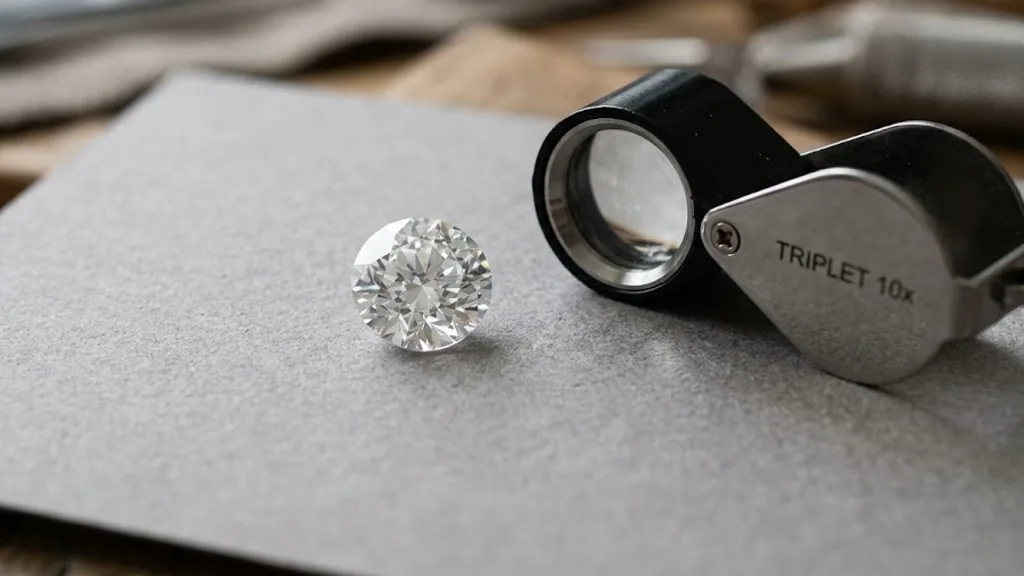
The universal reference point is 10x magnification — roughly what a jeweller’s loupe gives you. A diamond is graded at 10x, not with the naked eye and not under a microscope at 40x. That single fact explains most of the confusion around clarity, because a stone can be full of features at 10x and look completely clean on a hand.
The common types of inclusion
- Crystal — a tiny mineral grain trapped inside. Can be colourless, white or dark.
- Feather — a small internal crack. Named because it looks feathery when light catches it.
- Cloud — a hazy group of microscopic pinpoints. Large clouds can make a stone look milky.
- Pinpoint — a single very small dot, usually harmless.
- Needle — a long, thin crystal.
- Graining — faint internal growth lines. Common in lab-grown diamonds and usually invisible.
The clarity scale
| Grade | Full name | What a grader sees at 10x | Naked eye |
|---|---|---|---|
| FL | Flawless | No inclusions or blemishes at all | Clean |
| IF | Internally Flawless | Surface blemishes only | Clean |
| VVS1, VVS2 | Very, very slightly included | Extremely hard for an expert to find | Clean |
| VS1, VS2 | Very slightly included | Minor, found with a little effort | Clean |
| SI1, SI2 | Slightly included | Noticeable straight away | Usually clean at SI1; SI2 is a gamble |
| I1, I2, I3 | Included | Obvious, and may affect durability | Visible, often clearly |
The phrase you will hear constantly is eye-clean. It means no inclusion is visible to a person with normal vision looking at the stone face-up from about 25 to 30 centimetres away. Eye-clean is not a graded category — it is a practical description, and it is the thing most buyers genuinely care about.
How to judge diamond clarity
Graders do not just count inclusions. Five things decide the grade, and understanding them is what lets you judge two stones with the same grade and pick the better one.
1. Size
A single large feather will pull a grade down further than several tiny pinpoints. Size is relative to the stone, so the same inclusion matters more in a half-carat diamond than in a two-carat one.
2. Number
More features means more chance one of them is visible and more risk of the stone looking hazy overall.
3. Position
This is the one buyers overlook. An inclusion directly under the table — the big flat facet on top — is in the worst possible place, because you look straight through it. The same inclusion near the girdle (the outer rim) can be hidden by a claw and effectively disappear. Position also causes reflection: an inclusion sitting near a pavilion facet can be mirrored several times, so one dot reads as four.
4. Nature
What the feature actually is. A feather that reaches the surface is treated more seriously than a contained crystal, because it is a potential weak point. A dark crystal is more noticeable than a colourless one of the same size.
5. Relief
How much the inclusion stands out against the diamond around it. High relief means high contrast, which means easier to see.
What this means in practice
Two stones both graded VS2 can look quite different. The better one has its inclusions off to the side, colourless, and spread out. The weaker one has a single crystal parked under the table. That is why looking at the plot diagram beats trusting the letter grade alone.
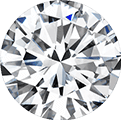
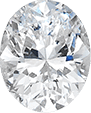
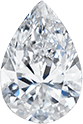
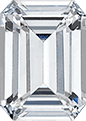
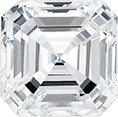
Shape matters too. Step cuts such as emerald and asscher have long, open, mirror-like facets that act as windows into the stone, so inclusions show more easily. Brilliant cuts such as round, oval and pear chop light into hundreds of flashes that hide small features well. If you love the clean architecture of a step cut — as in our Three Stone Emerald Cut Engagement Ring — it is worth aiming a grade or two higher than you would for a round.
How to find out a diamond’s clarity
You cannot work out a formal clarity grade at home. It is issued by a laboratory, and there are only a few reliable ways to retrieve it.
Read the certificate
This is the proper answer. An independent laboratory report — IGI, GIA or similar — states the clarity grade and normally includes a plotted diagram showing where each inclusion sits. Every centre stone we sell comes with a free IGI certificate for exactly this reason.
Look up the report number online
Each laboratory publishes a free report-check tool on its own website. Type in the report number and the original grading data appears. If a seller’s paperwork does not match the laboratory’s own record, walk away.
Find the laser inscription
Most certificated diamonds have the report number laser-inscribed on the girdle in letters far too small to see unaided. A jeweller can read it with a loupe or microscope, which lets you match the physical stone to the paperwork. Lab-grown stones are usually also inscribed with wording such as “lab grown” or the growth method.
Have it assessed
If you have inherited a ring with no paperwork, an independent valuer or gemmologist can estimate clarity while the stone is still set. Be aware that a grade given on a mounted stone is an estimate — claws hide part of the diamond. For a formal grade the stone must be unset and submitted to a laboratory.
One warning: a shop’s own “certificate” with the shop’s name on it is not an independent report. Neither is a valuation for insurance, which is about replacement cost rather than grading.
How to see diamond clarity with your own eyes
You do not need a laboratory to check whether a stone is eye-clean. You need good technique.
- Clean the diamond first. Skin oil and hand cream mimic haze and hide everything. Warm water, a drop of washing-up liquid, a soft toothbrush, rinse and dry.
- Use diffused daylight. A window on an overcast day is ideal. Bright shop spotlights create so much sparkle that inclusions are masked — which is precisely why shops use them.
- Hold it at arm’s length first, then bring it to about 30 centimetres. If you cannot see anything at that distance, it is eye-clean, and that is the test that matters for daily wear.
- Look face-up, through the table. That is how the ring will be seen.
- Then tilt it slowly. Inclusions often flash into view at a particular angle.
- Now use a 10x loupe. Hold it right against your eye — not against the stone — and move the diamond towards you until it focuses, roughly 2 to 3 centimetres away. Keep both eyes open; it feels odd for the first minute and then becomes easy.
- Compare with the plot. Match what you find against the certificate diagram. It is the quickest way to confirm the stone in your hand is the stone on the paperwork.
Also check the diamond against a white background as well as a dark one. Dark backgrounds flatter stones; white paper is honest.
Frequently asked questions
What clarity grade should I actually buy?
For most buyers, VS1 or VS2 gives a stone that is eye-clean with room to spare and does not pay for perfection nobody can see. SI1 is often eye-clean in a brilliant cut, but you should check the plot or the stone. We cover this fully in our guide to the best clarity for a lab-grown diamond.
Can I judge clarity from a website photograph?
Not reliably. Product photography is lit to maximise sparkle and is often taken at high magnification, which makes tiny features look alarming and hides others. Use the certificate and plot diagram instead.
Do lab-grown diamonds have inclusions?
Yes. They are real diamond and they grow with real internal features, though the types differ slightly — metallic flux inclusions in HPHT stones, faint graining in CVD stones. They are graded on exactly the same scale.
Does clarity affect how much a diamond sparkles?
Far less than cut does. Unless inclusions are large enough to block light or numerous enough to make the stone hazy, sparkle is overwhelmingly a matter of cut quality and proportions. See colour or clarity: which one actually makes a diamond sparkle.
What is a plot diagram?
A map of the diamond on the certificate showing the position and type of each inclusion, drawn from above and below. Red marks are internal, green marks are surface blemishes. It is the most useful part of a report.
Have a look for yourself
Every centre stone in our collection is untreated lab-grown diamond with a free IGI certificate, so the grade and the plot are yours to check. Browse the engagement rings or, if you want a shape that shows off clarity, the emerald cut selection. If you prefer a brilliant cut that hides small features, our Solitaire Round Cut Engagement Ring in Platinum is £657 at the time of writing.
Everything is hand-made in solid gold or platinum in North Harrow, London, with free insured UK delivery and 30-day returns.
Ready to find your perfect ring?
Explore our lab-grown diamond collection or book a virtual appointment with our team.