Diamond Clarity Grades Explained: Every Level, Rating and Number
The full FL to I3 clarity scale in plain English, what the numbers really mean, and which grade to buy for each diamond shape and size.
Diamond clarity is graded on an eleven-step scale that runs from Flawless at the top to I3 at the bottom. People search for it as “clarity ratings”, “clarity levels” and “the best clarity number”, and they are all asking the same thing: which grade should I actually buy?
This guide sets out the whole scale in plain English, explains what the numbers after the letters mean, and gives you a straight recommendation for each diamond shape and size.
What clarity is measuring
Diamonds grow under extreme heat and pressure — deep in the earth over a very long time, or inside a growth chamber over weeks. Either way, small features get caught in the crystal as it forms.
- Inclusions sit inside the stone: tiny crystals, feathers (small internal fractures), clouds (hazy groups of specks), pinpoints and needles.
- Blemishes sit on the surface: polish lines, small nicks, naturals left from the rough crystal.
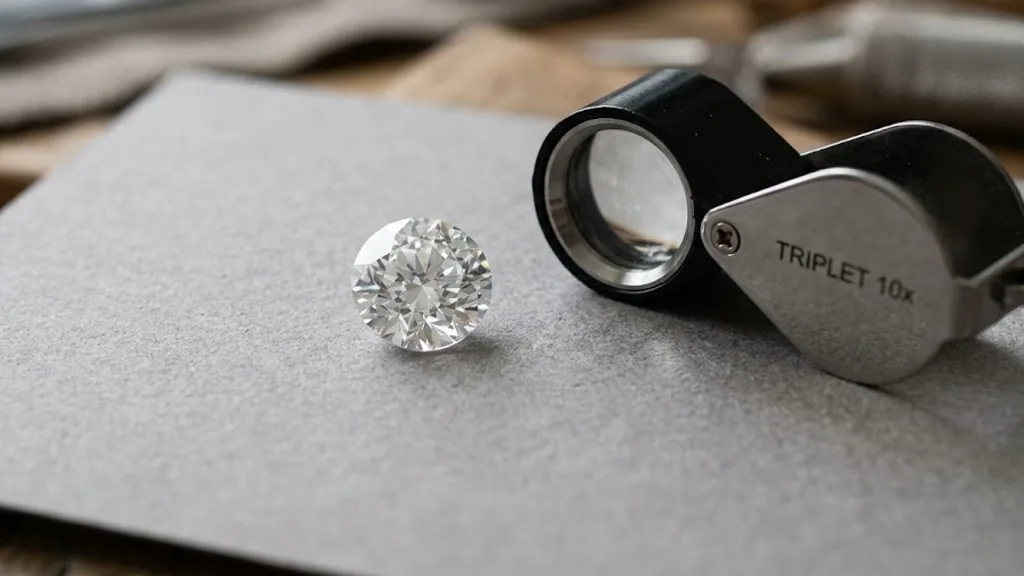
A clarity grade records how many there are, how large, how visible, what type and — importantly — where they sit. All of it is judged under 10x magnification by a trained grader.
That last detail is the one that unlocks the whole subject. The scale describes what a specialist sees through a loupe, not what you will see on a hand across a dinner table.
The full clarity scale
| Grade | Full name | At 10x magnification | To the naked eye |
|---|---|---|---|
| FL | Flawless | No inclusions, no blemishes | Clean |
| IF | Internally Flawless | No inclusions; minor surface blemishes only | Clean |
| VVS1 | Very, Very Slightly Included 1 | Extremely difficult to find | Clean |
| VVS2 | Very, Very Slightly Included 2 | Very difficult to find | Clean |
| VS1 | Very Slightly Included 1 | Difficult to see | Clean |
| VS2 | Very Slightly Included 2 | Somewhat easy to see | Clean in almost all cases |
| SI1 | Slightly Included 1 | Noticeable | Usually clean — check the plot |
| SI2 | Slightly Included 2 | Easily noticeable | Sometimes visible |
| I1 | Included 1 | Obvious | Usually visible |
| I2 | Included 2 | Prominent | Visible; brightness may suffer |
| I3 | Included 3 | Severe | Clearly visible; transparency and sometimes durability affected |
Is there a “clarity number”?
Not officially, and this is worth clearing up because it causes real confusion.
The recognised laboratories — IGI, GIA and others — use letters, not numbers. The digits you see are simply dividing a band into two: VS1 is the better half of VS, SI2 the lower half of SI. There is no grade called “clarity 5” or “clarity 8” on any laboratory certificate.
Some retailers and comparison websites invent their own 1-to-10 clarity numbers to make filtering easier on a website. There is nothing sinister in that, but the numbers are theirs, not an industry standard, and they do not transfer between sellers. If you are comparing two stones, compare the letter grades on the certificates.
So when people ask “what is the best clarity number”, the answer is: ask instead which letter grade suits your shape and size. That question has a genuinely useful answer, and it is below.
The one thing that decides everything: eye-clean
The trade uses the phrase eye-clean to mean a diamond in which you cannot see any inclusions without magnification, at normal viewing distance.
Eye-clean is not a graded term. It is a description, and it depends on your eyesight, the lighting and how hard you are staring. Treat it as a rule of thumb in the trade rather than a measured standard.
But it is the practical target. Once a diamond is eye-clean, every further step up the scale improves the paperwork and nothing else. Understanding that saves buyers a great deal of money.
Which grade should you actually buy?
The right answer depends on the shape and the size, because those change how much of the stone’s interior you can see into.
| What you are buying | Sensible clarity floor | Why |
|---|---|---|
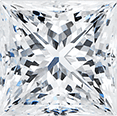
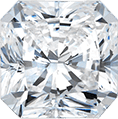
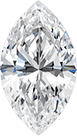
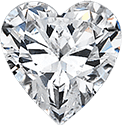
| Round, oval, pear, marquise, cushion, heart, radiant — under 1.5ct | SI1 | Busy facet patterns scatter light and hide small features |
| The same brilliant shapes — 1.5ct to 3ct | VS2 | More stone to see into; VS2 keeps it comfortably eye-clean |
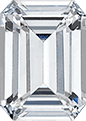
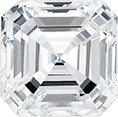
| Emerald, asscher, baguette — any size | VS1 | Long open facets act like windows and show everything |
| Emerald or asscher over 2ct | VVS2 | Size plus openness makes inclusions much easier to find |
| Accent stones (pavé, halo, eternity bands) | Whatever the maker supplies | Melee is far too small for anyone to see into |
Those are floors, not ceilings. Going higher is fine — just know you are buying certainty rather than appearance.
Position beats grade
Two stones with the same letter grade can look quite different, and the reason is where the inclusions sit. Every certificate includes a plot — a diagram of the diamond with its features marked. Learn to read it and you will buy better than most people.
- Under the table — the big flat facet on top. The worst place for anything to be, because it is directly in your line of sight.
- Near the girdle — the thin band around the widest part of the stone. The best place, often hidden entirely by a claw or bezel.
- Dark versus white — a black crystal is far more visible than a white one of the same size.
- Feathers reaching the surface — usually harmless when contained, but worth asking about if one sits where a claw will grip.
- Large clouds — can leave a stone looking faintly hazy even when nothing individual stands out. Certificates sometimes note this in the comments, so read them.
An SI1 with a small white crystal near the girdle is a better diamond to look at than a VS2 with a dark speck under the middle of the table. The letters alone will never tell you that.
Clarity does not create sparkle
A very common assumption, and it is wrong. Clarity has almost nothing to do with how much a diamond sparkles.
Sparkle comes from cut — the angles and proportions that decide whether light entering the top of the stone bounces back to your eye or leaks out of the base. Cut too deep and the centre goes dark. Cut too shallow and the stone looks watery and flat.
Clarity only affects brightness at the very bottom of the scale, where heavy included material or extensive cloud reduces transparency. Anywhere from SI1 upwards, it has no practical effect.
If you are balancing a budget, the order to protect is: cut first, then carat weight or colour according to taste, and clarity last. Our guide to whether colour or clarity matters more goes into that trade-off properly.
Going deeper on each band
- Flawless and Internally Flawless — the top two grades and who they are really for.
- VVS1 clarity — near-perfect on paper, and where it earns its cost.
- VS1 and VS2 clarity — where most sensible buyers land.
- SI1 and SI2 clarity — the value grades, and how to check them safely.
- Clarity enhanced diamonds — a completely different thing, and one to understand before buying.
Clarity grading for lab-grown diamonds
Lab-grown diamonds are graded on the same FL to I3 scale, by the same laboratories, at the same 10x standard. A VS1 lab-grown diamond meets the same definition as a VS1 natural diamond.
The inclusion types differ slightly. Stones grown by the HPHT method can carry small metallic flux inclusions, which are dark and therefore more noticeable for their size. CVD-grown stones tend towards pinpoints and faint graining. None of this changes the grade, but it makes reading the plot worthwhile.
Because growth conditions are controlled rather than geological, the higher clarity grades are produced more readily in a laboratory than they are found in the ground. That means a VS or VVS grade is usually easier to reach in a lab-grown stone at a given size. Take that as general guidance about how the two markets behave, not a quoted figure.
Every centre stone we set at CarbonstoneUK comes with a free IGI certificate showing the clarity grade and the plot.
Clarity in a finished ring
Settings change how much clarity you need. A halo, cluster or pavé design gives your eye so much competing sparkle that the centre stone is never studied in isolation — our Halo Heart Cut Engagement Ring in Rose Gold, at £949 correct at the time of writing, works exactly this way.
A plain solitaire does the opposite. Nothing distracts from the stone, so a clean grade shows its worth. Our Minimalist Round Cut Engagement Ring, at £587 correct at the time of writing, is about as unadorned as a mount gets. A three stone design sits between the two — our Three Stone Oval Cut Engagement Ring, at £1,021 correct at the time of writing, spreads the eye across three stones.
Browse all our engagement rings, or filter by round or oval.
Frequently asked questions
What is the best clarity grade for an engagement ring?
VS2 for most brilliant cuts, VS1 for emerald and asscher cuts, and SI1 is often fine in a brilliant cut under one and a half carats if the plot shows nothing central. Above VS1 you are improving the certificate rather than the ring.
How many clarity levels are there?
Eleven: FL, IF, VVS1, VVS2, VS1, VS2, SI1, SI2, I1, I2 and I3. They are grouped into six named bands.
What does the number after the letters mean?
It splits a band in two. VS1 is the cleaner half of VS, SI2 the less clean half of SI. It is not a score out of ten and it does not compare across bands.
Does clarity affect the price a lot?
It is one of the four factors that set price, alongside cut, colour and carat weight. Steps near the top of the scale cost proportionally more than steps in the middle, which is why VS grades tend to represent the best balance.
Can I see a diamond’s clarity myself before buying?
Yes — ask for the certificate and its plot, ask for a magnified video if you are buying remotely, and look at the stone in person if you can. For SI grades in particular, this is the step that separates a good buy from a gamble.
Putting it together
Clarity is the grade where knowledge saves the most money. Once a stone is eye-clean, further grades are certainty rather than beauty — and that certainty is worth buying only in the shapes and sizes that genuinely show it.
Every centre stone we set is lab-grown and IGI certified, hand-made into solid gold or platinum in North Harrow, London, with free insured UK delivery and 30-day returns. If you have a clarity grade in mind for a design we do not currently stock, we create bespoke pieces at no extra design cost.
Ready to find your perfect ring?
Explore our lab-grown diamond collection or book a virtual appointment with our team.