What Is Windowing in a Diamond? How to Spot It
Windowing is a see-through patch where light passes straight through a shallow stone. Tilt it 10 degrees under a lamp and the dead area shows itself.
Windowing is a see-through patch in the middle of a diamond, where light passes straight out of the back instead of bouncing back to your eye. It happens when a stone is cut too shallow. Tilt the ring about 10 degrees under a lamp and the window shows as a flat, glassy area with no sparkle.
What does windowing look like in a real stone?
Windowing looks like a dull, flat area in the middle of a stone, as if you were looking through a pane of glass rather than at a diamond. Under a lamp the rest of the stone flashes and that middle patch stays quiet. Hold the ring over a printed page and you may be able to read the letters through it. That is the plainest test there is, and it costs nothing.
At the bench we call it a window, and plenty of customers arrive calling it see-through, which is the same fault under a plainer name. Either way the cause is identical. The back facets sit at too shallow an angle to turn light around. A well cut stone behaves like a mirror; a windowed one behaves like a pane of glass.
Why does a shallow cut let light straight through?
A shallow cut fails because the pavilion, which is the cone-shaped bottom half of the diamond, is too flat to reflect light back up. Light entering the top hits those back facets at an angle that lets it escape out of the bottom instead of bouncing across and returning to your eye. The centre of the stone is where that leak is widest, so that is where the dead patch appears first.
Cutters take the shallow route because it saves weight. A flatter stone spreads wider for the same carat, so a 1.00 ct diamond can be made to look like a considerably bigger one. You end up paying for width you can see across the finger but cannot see any sparkle in. Our guide to what does a diamond look like before it’s cut covers the choices a cutter faces.
Which diamond shapes window most often?
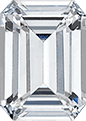
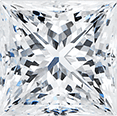
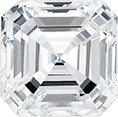
Diamond shapes with large flat facets window most often, which puts emerald, Asscher and baguette cuts at the front of the queue. These are step cuts, meaning their facets run in long parallel rows like steps rather than in triangles, so there is less going on to break light up and hide a leak. Ovals and pears window across the belly when they are cut too flat. Round brilliants window least of all.
Shape does not doom a stone, though. A well proportioned emerald cut has a clean, glassy pool in the middle by design and still returns plenty of light at the ends. Our our complete guide to diamond shapes sets out how each outline behaves, and the difference between the two flattest step cuts is covered in what is the difference between baguette and emerald cut.
The table below matches each shape to how likely it is to window and to the one thing worth checking before you pay for it.
| Shape | Risk of windowing | What to check |
|---|---|---|
| Round brilliant | Low | Cut grade on the IGI report |
| Oval or pear | Medium | Tilt 10 degrees and watch the belly |
| Emerald or Asscher | Higher | Depth under 62% deserves a second look |
| Baguette | Higher | Small sizes hide it; large ones do not |
| Marquise | Medium | Centre of the stone, not the points |
How do you check for windowing before you buy?
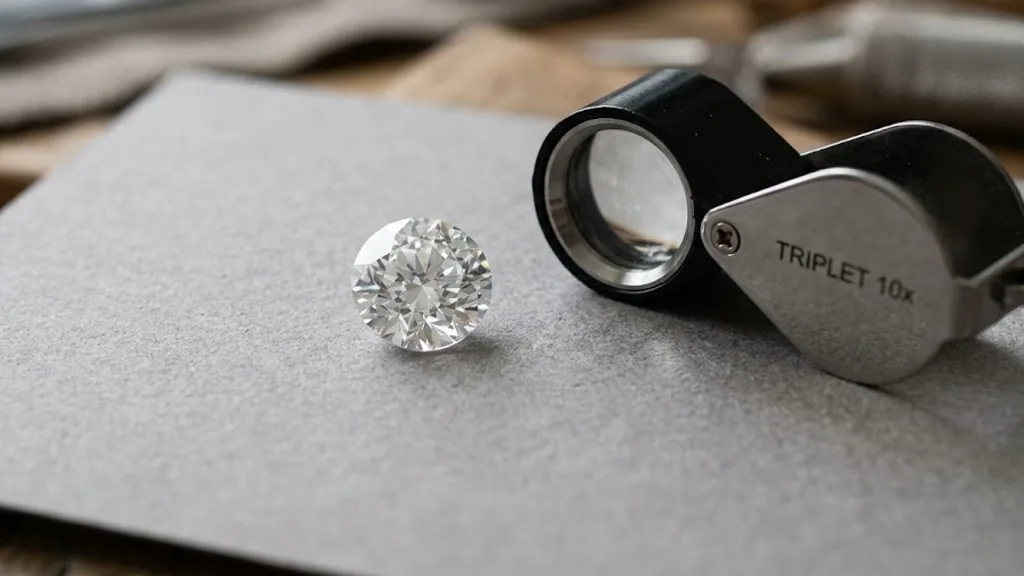
Checking for windowing takes about fifteen seconds and needs nothing but a lamp and a printed page. Hold the stone face-up under a single light, at arm’s length, and look at the middle. Then tilt it slowly, roughly 10 degrees each way. A window shows as a pale, glassy patch that stays pale while everything around it flashes. Move your head rather than the ring if it is already on a finger.
The printed-page test is the second half. Lay the stone table-down over small text; if you can read the letters through the middle, light is going straight in and straight out. Do this in a shop, on a video call with a seller, or on a stone you already own. It works on a mounted ring as well as a loose stone, though a rubover rim will hide the very edge of the window from you.
Does a photograph or a video show windowing at all?
A photograph rarely shows windowing, and that is exactly why the fault survives online. Product photography uses several lights placed to fill every part of the stone, so a window gets lit from behind and reads as brightness rather than as a hole. A 360-degree video is better, because the stone moves through many angles and a window stays flat while everything else changes. Ask for video shot under one light source.
This is a good reason to ask a seller direct questions rather than to trust images. The mount matters as well, because a rubover rim changes how much light reaches the edges of a shallow stone. Our guide to how each ring setting holds the stone explains what each one does to the light.
Is windowing the same thing as a bow tie?
Windowing is not the same as a bow tie, and the two get mixed up constantly. A bow tie is a dark shadow shaped like a bow across the width of an elongated stone, caused by your own head blocking the light the stone is trying to gather. Windowing is the opposite fault: a pale patch where light escapes out of the back. A shadow is darkness; a window is emptiness.
The practical difference is how much each one matters. A faint bow tie is normal on ovals and marquises and many people never notice it, which is set out in our guide to the bow tie effect in oval diamonds. Windowing is the more serious of the two, because it is a proportion fault rather than a viewing effect, and no angle or setting will undo it. On pointed shapes the mount matters too, and how many claws a pear diamond needs covers that side of it.
What can you do about a stone that windows?
A stone that windows can be recut, sold on, or simply lived with, and which of those is sensible depends almost entirely on size. Recutting means taking the diamond back to a cutter to steepen the pavilion angles, and it always costs weight. On a small stone the loss swallows the value of the work. On a larger stone it can be worth doing, especially where the diamond has sentimental value.
The honest option most people take is to change the stone rather than rescue it. If you are buying new, the fix is simply to look before you pay. Every centre stone we set comes with a free IGI certificate, and our workshop in North Harrow will set a stone you already own if you would rather keep it and change the mount instead.
Which stones should you look at instead?
Stones cut to sensible proportions are the answer, and they are not hard to find once you know what you are looking at. A round brilliant with a good cut grade is the safest starting point, because the round is the one shape where cut is graded in full on the report. Step cuts are fine as well, provided you tilt them first. Buy on how a stone behaves in your hand.
Prices below are correct at the time of writing. Our solitaire round cut ring in platinum is £657 and shows what a well proportioned round looks like face-up. If you like the clean look of a step cut, the solitaire emerald cut engagement ring is £672, and the solitaire oval cut engagement ring is £557. Compare the step cuts side by side in our emerald cut ring collection, or browse the whole engagement ring collection.
Frequently asked questions
Does windowing show on a certificate?
No. Neither IGI nor GIA reports windowing as a named fault, because it is a consequence of proportions rather than a grade of its own. On a round brilliant a poor cut grade will usually hint at it. On fancy shapes there is no cut grade at all, so the report gives you measurements and leaves the judgement entirely to you.
Can a shallow diamond be recut?
Yes, but it costs weight. A cutter steepens the pavilion angles to bring light back up, and that means grinding material away, so a 1.00 ct stone might come back at 0.80 ct or less. The work is only worth commissioning on larger stones, or where the diamond matters to you for reasons that have nothing to do with money.
Is windowing the same as a bow-tie?
No. A bow tie is a dark band across an elongated stone, caused by your own head blocking the light. Windowing is a pale, see-through patch caused by the back of the stone being cut too flat. One is a shadow you sometimes see, the other is light escaping for good. Windowing is the more serious fault of the two.
Why does my diamond look glassy in the middle?
A glassy middle almost always means the pavilion is too shallow and light is leaking out of the back. Tilt the stone 10 degrees under a single lamp; if the pale patch stays put while the edges flash, that is a window. Grease dulls a stone too, so clean it in warm soapy water first and then look again.
Do lab-grown diamonds window as well?
Yes, exactly as often as mined ones. Windowing is a cutting fault, not a growing one, so it has nothing whatever to do with how the crystal was made. A lab-grown stone cut to shallow angles shows the same dead centre as a mined stone cut the same way. Judge any diamond on its proportions, whatever its origin.
Can a setting hide a window in a stone?
No, not really. A rubover rim or a dark backing can make the middle of a shallow stone look less obviously see-through, but the light is still escaping and the stone still looks flat. Anything that appears to fix it is disguising it. Check the loose stone, or the finished ring under one lamp, before you buy.
More guides on this topic
Ready to find your perfect ring?
Explore our lab-grown diamond collection or book a virtual appointment with our team.