What Is a Hexagon Cut Diamond?
A hexagon cut has six straight sides and is usually a step or mixed cut. We make 4 hexagon rings, and each of the 6 corners is a point that needs covering.
A hexagon cut diamond is a six-sided stone with straight edges, usually cut in steps like an emerald cut rather than in triangles like a round brilliant. Its 6 corners are points, so the setting has to cover them. We make 4 hexagon rings, and every one of them protects those corners in some way.
What does a hexagon cut diamond look like face-up?
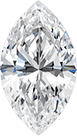
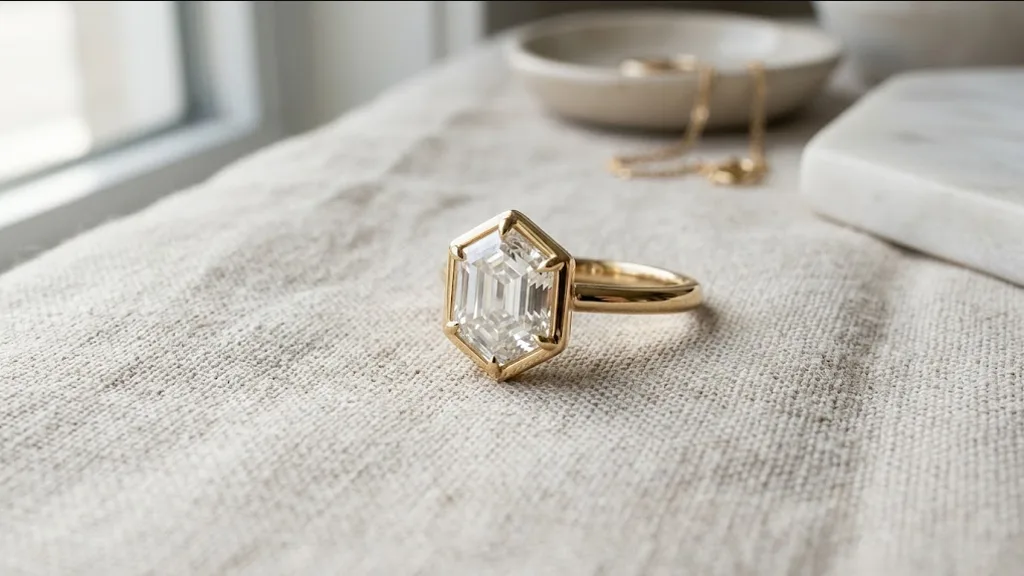
A hexagon cut diamond looks like a flat, six-sided panel: two long parallel sides, two short angled ends and six clean corners between them. Seen from above it reads as geometric and architectural rather than soft. Most hexagons are cut long rather than equal-sided, so the outline sits somewhere between an emerald cut and a marquise. The word hexagonal means the same thing and gets used just as often.
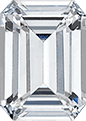
What you see inside the stone depends on the facet pattern rather than the outline. A step-cut hexagon shows broad, mirror-like flashes and long straight lines running parallel to the edges. A mixed-cut hexagon, with brilliant facets underneath, breaks light into smaller sparks. Both are sold as hexagon cuts, so ask which one you are looking at before you compare two stones on price.
Is a hexagon cut a step cut or a brilliant cut?
A hexagon cut is normally a step cut, and sometimes a mixed cut, but it is almost never a true brilliant. Step cutting means the facets are laid out in long parallel rows, like the treads of a staircase, running around the stone. That produces broad flashes and a clear view into the diamond. Mixed cutting keeps the step-cut top and adds brilliant facets below to add sparkle.
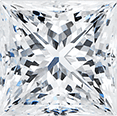
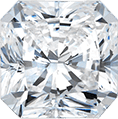
That family matters more than the outline when you are judging a stone. Step cuts show clarity and colour more openly than brilliant cuts do, because there is less flashing to distract the eye. If you want to know what a two-letter colour grade on a listing is telling you, what a G/H colour grade means explains it, and how the diamond shapes compare puts the three cutting families side by side.
How are the six corners protected in a setting?
The six corners of a hexagon are points, and a point is the thinnest, most exposed part of any cut stone, so the setting has to cover them rather than leave them proud. There are three ways a bench does it. A rubover, or bezel, wraps a continuous rim of metal around the whole outline. Corner claws sit on the points themselves. A halo of small stones surrounds and shields the edge.
We will not tell you a hexagon is tough, because we cannot support that. What we can say is what we do at the bench: on a hexagon we always set the corners rather than the flats, and we would refuse to make one where a corner stood clear of the metal. Ask any jeweller to show you, in the photograph, exactly what is holding each of the six corners.
How does a hexagon cut compare with an emerald cut?
A hexagon cut and an emerald cut are close cousins, and the honest difference is the corners. An emerald cut has its four corners cut off, which is precisely what makes it hard-wearing; a hexagon keeps six corners as points. Both are step cuts, both show a clean open table, and both reward good clarity because there is less flashing to hide anything inside the stone.
Price behaves differently between shapes for reasons of cutting yield rather than fashion, and step cuts often waste less rough than a round does. Our page on what baguette cut diamonds cost to buy works through the same question for the other flat step cut, and why lab-grown diamonds still cost money explains what you are actually paying for in a grown stone.
Which hexagon cut rings does CarbonstoneUK make?
CarbonstoneUK makes four hexagon cut rings, and the four cover the main ways of protecting those corners. Every one is hand-made in our North Harrow workshop, every centre stone is lab-grown and comes with a free IGI certificate, and the prices below are correct at the time of writing. Four rings is a small range, so if none of them is right we design bespoke at no extra design cost.
The solitaire hexagon cut engagement ring is £1,078 and holds the stone at the corners. The bezel hexagon cut ring in rose gold wraps the whole outline in metal at the same price, and the pavé hexagon cut engagement ring lines the band with small stones. The fourth, our floral hexagon design in sterling silver, is the same £1,078.
The table below is the short version, so you can match a setting style to the way it treats the six corners.
| Ring | How the corners are held | Price |
|---|---|---|
| Solitaire hexagon | Claws set on the corner points | £1,078 |
| Bezel hexagon, rose gold | Continuous rubover rim | £1,078 |
| Floral hexagon, sterling silver | Petal frame around the outline | £1,078 |
| Pavé hexagon | Corner claws, stone-set band | £1,078 |
What should you check before buying a hexagon cut ring?
Before buying a hexagon cut ring, check three things: what covers the corners, what the certificate actually measures, and how deep the stone is. Fancy shapes like the hexagon receive no cut grade at all from IGI or GIA, so nobody is grading the sparkle for you. The report gives you colour, clarity, carat weight and millimetre measurements, and the rest is your own eye.
How wide a hexagon looks for its carat weight depends on how deeply it is cut, and there is no single millimetre figure we can honestly give you for the shape. Ask for the measurements from the report rather than trusting a photograph. For a sense of how carat weight and price move together on other shapes, how much is a marquise diamond worth works through real numbers.
One point on certificates is worth stating plainly, because a lot of published advice is now out of date. IGI still grades lab-grown diamonds on the familiar colour and clarity scales. GIA stopped using the D to Z and IF to I3 scales for lab-grown stones on 1 October 2025 and now gives an overall assessment of Premium or Standard instead. Our certificates are IGI, which is why our listings quote letters.
Should you choose a hexagon cut diamond ring?
Choosing a hexagon cut ring comes down to whether you want a geometric outline and are content to have the corners covered by metal. It suits someone who likes clean lines, straight edges and a stone that looks made rather than grown. It suits less well anyone who wants the maximum sparkle for the money, because a step cut trades fire for clarity by design.
We make no claim about how rare, how popular or how resaleable a hexagon cut is. No reliable public figure exists for any of those, and a jeweller who quotes one to you has made it up. Buy it because you like looking at it. You can see all four together in our hexagon cut ring collection, or compare outlines across the whole engagement ring collection.
Frequently asked questions
Does a hexagon cut sparkle like a round brilliant?
No. A round brilliant is designed for maximum sparkle, and a hexagon is usually a step cut designed for clean lines and broad flashes of light. A mixed-cut hexagon, which adds brilliant facets underneath, closes some of that gap. If small flashing sparks are what you want from a diamond, the round is the shape that delivers them.
Which setting suits a hexagon cut diamond?
A rubover, also called a bezel, suits it best, because a continuous rim of metal covers all six corner points at once. Corner claws are the next choice and show more of the stone. A halo works too, since the surrounding small stones shield the edge. What matters is that no corner is left standing proud of the metal.
Can a hexagon cut diamond chip at the corners?
Yes. Every pointed corner on any cut stone is a place where the crystal is thin and a knock is concentrated, and a hexagon has six of them. Diamond is extremely hard but it is not unbreakable, and a sharp blow at the right angle can chip a point. That is why the setting has to cover the corners.
Is a hexagonal diamond the same as a hexagon cut?
Yes, they are two names for one shape. Sellers use hexagon cut and hexagonal diamond interchangeably, and you will see both spellings on listings for the same stone. Neither term tells you the facet pattern, so ask whether the stone is a step cut or a mixed cut before you compare two of them on price.
Do you make hexagon rings in platinum?
No, not as a stock item. Our four hexagon rings are made in gold and in sterling silver, and platinum is not among them at the moment. We do design bespoke at no extra design cost, so a hexagon in platinum is something our workshop can make to order. Ask us before assuming a shape and a metal cannot be combined.
What size is a hexagon cut diamond in millimetres?
That depends entirely on how the individual stone was cut, and no honest figure exists for the shape as a whole. Two hexagons of the same carat weight can measure noticeably differently across the face if one is cut deeper than the other. Read the millimetre measurements from the IGI report rather than relying on a photograph.
More guides on this topic
Ready to find your perfect ring?
Explore our lab-grown diamond collection or book a virtual appointment with our team.