What Is an I Colour Diamond, and Is It Too Yellow?
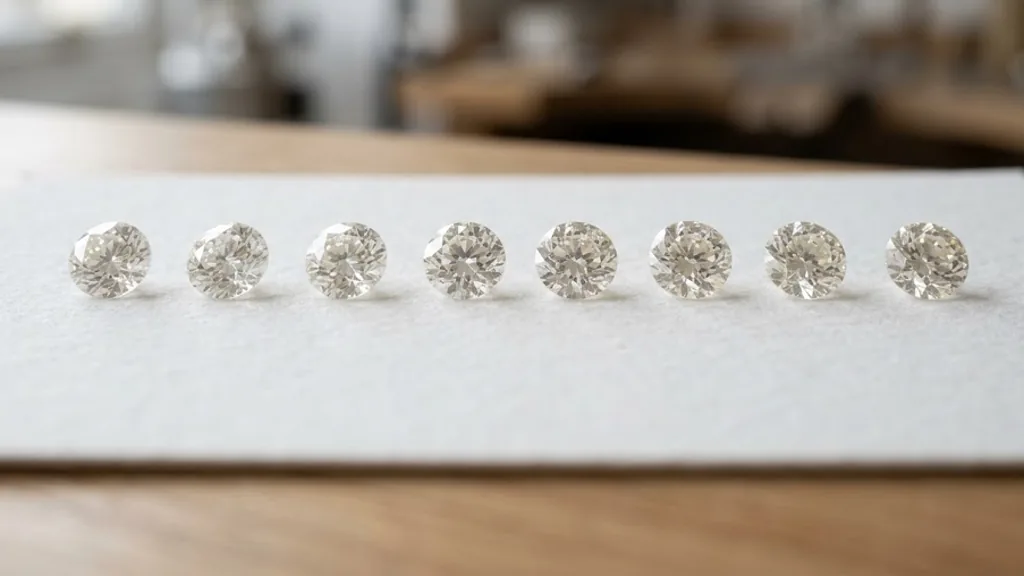
An I colour diamond sits third in the near-colourless band, below H and above J. In yellow gold it reads white; in platinum an IGI-graded I can look warm.
No, an I colour diamond is not too yellow to the naked eye once it is set, but the metal you set it in decides how warm it looks. I is the sixth grade on the D to Z scale used by IGI and GIA, one letter below H and one above J, and the third of the four near-colourless grades. Face-up on a hand, most people cannot spot it.
Where does I colour sit on the D to Z scale?
I colour sits sixth on the D to Z scale, and third of the four grades — G, H, I and J — that graders call near-colourless. The three letters above it, D, E and F, make up the colourless band. K and below is where the trade starts describing a stone as faint yellow. The letter records how little body colour a stone shows against master stones under controlled light, which is not the same as how it looks on a finger.
Our guide to the full D-Z colour scale sets every grade out in order, and explains why the scale starts at D rather than A.
Is an I colour diamond too yellow?
An I colour diamond is not too yellow for most buyers in most settings, and that is an honest answer rather than a reassuring one. Face-up in a finished ring, an I reads as white to an untrained eye. Lay it on a white tray beside a D and the warmth appears immediately. Graders can separate the grades because they look at loose stones from the side, upside down, against masters, on a neutral background — three conditions your ring will never meet.
Does yellow gold or platinum suit an I colour diamond better?
Yellow gold suits an I colour diamond better than platinum, and it is the most useful single thing to know about this grade. A warm metal reflects up into the stone from below, the faint tint of an I disappears into that warmth, and the diamond reads white against the gold. Cool white metals do the opposite. Platinum, white gold and sterling silver put a colourless reference right beside the stone, and any warmth in the diamond has something to be measured against.
The table below sets the three neighbouring near-colourless grades side by side, with the metal we would reach for first with each one at the bench.
| Grade | What you see face-up | Metal we would set it in |
|---|---|---|
| G | Reads colourless to almost every untrained eye | Any metal, any size |
| H | No warmth visible in white metal at normal sizes | Platinum or white gold, safely |
| I | White face-up; faint warmth from the side | Yellow or rose gold first; white metal happily under 1 ct |
| J | Warmth shows in large stones and step cuts | Yellow or rose gold |
Does a bigger diamond show I colour more?
A bigger diamond does show I colour more, because body colour depends on how much crystal the light has to travel through. The same grade that vanishes in a half-carat stone can read faintly warm at 2 ct, simply because there is more material for light to pass through on its way out. Under about 1 ct, an I is a safe choice in any metal. There is no fixed weight at which the tint arrives, though; it is a judgement, not a threshold.
Which diamond shapes show I colour most?
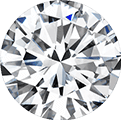
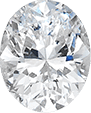
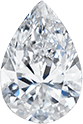
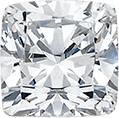
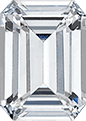
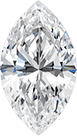
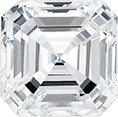
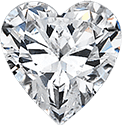
Step cuts show I colour most and round brilliants hide it best. An emerald or asscher cut has long, open facets that behave like windows, so whatever body colour the stone carries is shown plainly rather than broken up. A round brilliant does the opposite, scattering light through so many small facets that a faint tint is masked. Elongated brilliants — oval, pear and marquise — gather colour at their points, and the tips are where you will notice an I first.
Our how shape changes what colour you see guide covers each outline in turn, and colour against clarity in an oval takes the elongated shapes further.
Should you pay up to H, or drop down to J?
Pay up to H and you buy a small, genuine reduction in warmth; drop down to J and you save more than you lose, provided the ring is yellow or rose gold. H, I and J are neighbours inside one band and none of them is a cliff edge. In white metal, H is the safest of the three and I the sensible middle. In a warm metal, an I and a J are hard to tell apart on a hand.
Both neighbours have their own page: the grade one letter above, and where the warmth first shows. Colour is also only one of the four Cs, and pairing an I with a mid clarity grade is a question in its own right — our guide to VS2 and SI1 clarity grades answers that one.
How much does choosing I colour actually save you?
Choosing I colour saves money on any comparable stone, but no honest single figure exists for how much. Diamond prices move with carat weight, cut quality, clarity, supplier and the week you buy, and the gap between two dealers can be wider than the gap between two neighbouring colour grades. A fixed percentage for an I against a G is a rule of thumb in the trade, not a measured figure, and we will not quote one.
What you can do is price two otherwise identical stones side by side and read the difference yourself. Our own rings are priced by the setting rather than by one grade: the vintage round cut ring in yellow gold is listed at £1,051 and the solitaire round cut ring in platinum at £657, both correct at the time of writing.
When is an I colour diamond the wrong choice?
An I colour diamond is the wrong choice in three situations, and we would say so before taking an order. The first is a large step cut in a cool white metal, where open facets give the colour nowhere to hide. The second is a buyer who plans to compare their stone against a colourless one, because that comparison is exactly what makes an I visible. The third is anyone who will worry about the letter whatever their eye tells them.
If a step cut is what you want and the letter matters to you, look at a stone in that shape before you commit: our solitaire emerald cut engagement ring shows how open a step cut face really is. Every centre stone we set carries a free IGI certificate, so the grade is stated rather than claimed, and each ring is made by hand in North Harrow.
You can compare metals across our engagement ring collection, look only at emerald cut rings in stock, or read our diamond education guides for the rest of the four Cs.
Frequently asked questions
What is the cheapest diamond colour?
The lowest letters on the D to Z scale cost the least, so a stone graded S to Z is cheaper than a K, which is cheaper than a J. Within the near-colourless band that most engagement rings use, J is the cheapest and I is next. Cut, clarity and carat weight all move the price as well, so colour alone never sets it.
What is the best colour letter for a diamond?
No single letter is best for every ring, and any answer that ignores the metal is guessing. In platinum or white gold, G and H give a white look with nothing to think about. In yellow or rose gold, I and J look the same as each other and cost less. Settle cut quality first, then buy the highest letter your budget reaches.
Is an I colour diamond okay for an engagement ring?
Yes. An I colour diamond is a sound choice for an engagement ring and it is one of the grades we set most often. In a finished ring, seen face-up on a hand, it reads white to almost everyone who looks at it. The exception is a large step cut in a cool white metal, where those long open facets show body colour plainly.
Do lab-grown diamonds come in I colour?
Yes. Lab-grown diamonds are graded on the same D to Z colour scale as mined stones, and I is a common grade among them. A grown stone can fall anywhere on that scale depending on how it was grown and how it was treated afterwards. The letter on an IGI report means the same thing whichever way the crystal was made.
Where does I colour appear on an IGI certificate?
An IGI report states the grade as a single capital letter in its colour field, alongside clarity, cut and carat weight. The report carries its own number, and many stones are laser inscribed with that number on the girdle so the paper and the diamond can be matched. Every centre stone we sell arrives with its own IGI report.
Does I colour matter more in a solitaire than in a halo?
No. Colour tends to matter more in a halo than in a solitaire, because a ring of small near-colourless melee sits directly against the centre stone and hands your eye an instant comparison. A solitaire gives a faint tint nothing to be measured against. A warm metal, or a bezel in yellow gold, softens the contrast either way.
More guides on this topic
Ready to find your perfect ring?
Explore our lab-grown diamond collection or book a virtual appointment with our team.