What Does Choosing a Cushion Cut Say About You?
Nothing provable, but the choice does signal taste. A cushion reads soft and vintage beside a sharp 1 carat emerald cut, which is why people choose it.
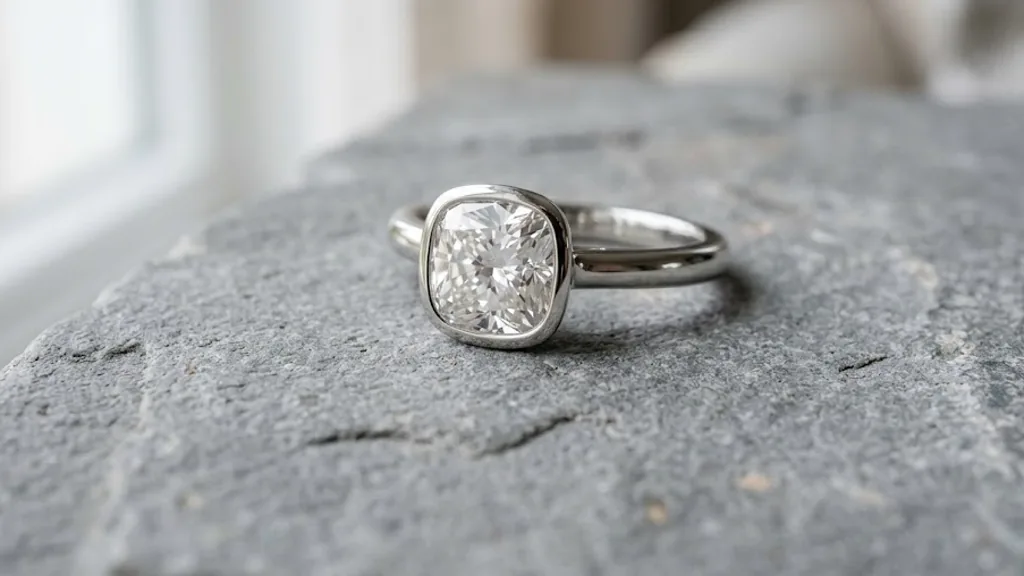
Choosing a cushion cut says nothing provable about your personality, because no evidence links a diamond shape to character. What it does signal is taste. A cushion reads soft, warm and slightly vintage next to a sharp 1 carat emerald cut or a crisp round, and people who pick it usually want an antique feel without an antique stone.
What does a cushion cut suggest about your taste?
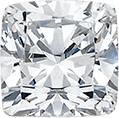
A cushion cut suggests a taste for softness over sharpness, and for a ring that looks a little older than it is. The rounded corners and larger facets read as warm rather than technical, which is why cushions sit so comfortably inside vintage-styled settings. None of that is a personality reading. It is a description of what the shape looks like, and of who tends to be drawn to that look.
Every shape carries this kind of association, and they are worth knowing simply because other people will read them. Our pillar guide to every diamond shape explained sets out what each outline does on the hand, which is the part of the choice that will still matter long after the symbolism has stopped being interesting.
How does a cushion read next to a round or an emerald?
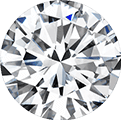
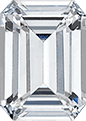
A cushion reads soft next to a round and warm next to an emerald cut, and the three shapes sit at different points on one line. A round is symmetrical, bright and precise. An emerald cut is architectural, with long flat facets and visible steps. The cushion falls between them: pillowy in outline, broad in its flashes of light, and never quite as sharp as either neighbour.
Round is the default rather than the boring option, whatever anyone tells you, and our piece on whether round diamonds still look current takes that charge seriously. A cushion is what people choose when they want the softness of a round without joining the majority who pick one.
The table below sets out what each shape tends to get read as, and what that reading is actually built on.
| Shape | What people read into it | What the reading is built on |
|---|---|---|
| Round | Classic, safe, traditional | It is the most chosen shape |
| Cushion | Romantic, vintage, gentle | Descends from the old mine cut |
| Oval | Individual, elongating | Less common, stretches the finger |
| Emerald | Understated, architectural | Step facets and a flat table |
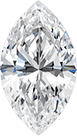
| Marquise | Bold, theatrical | Long outline and two sharp points |
| Pear | Distinctive, sentimental | Teardrop outline and old symbolism |
Why do people describe the cushion as romantic?
People describe the cushion as romantic because the shape is old, rounded, and associated with candlelight rather than showroom spotlights. The modern cushion descends from the old mine cut, hand-cut in the eighteenth and nineteenth centuries to look its best in low light. That history is the entire source of the word. Romance is attached to the story of the shape, never measured in the stone itself.
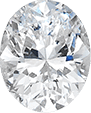
Other shapes collect their own stories in exactly the same way, which is a good clue that the stories are about history rather than about people. Our page on what an oval diamond symbolises traces where the oval’s reputation for individuality actually came from, and the answer is not a survey.
Does any evidence link a diamond shape to personality?
No evidence links a diamond shape to personality, and no study, survey or psychological finding supports the idea. Shape-and-personality articles are entertainment, written the way star signs are written, and they work because the descriptions are broad enough to fit almost anybody. We will not invent a statistic to make this page look more authoritative than it is. Taste is real. Personality readings are not.
We write these pages anyway, because people genuinely enjoy them and because the taste half is useful. Our companion piece on what a marquise diamond says about you takes the same honest line: describe what the shape does, say plainly where the meaning stops, and let the reader decide.
What do people assume when they see a cushion cut?
People tend to assume a cushion cut belongs to someone who likes antique jewellery, dislikes anything that looks mass-produced, and cares more about how a ring feels than about how it measures. Those assumptions are common, and they remain only assumptions. What a cushion genuinely tells a stranger is that the wearer chose a shape fewer people choose, which usually reads as considered.
Assumptions also change entirely with where you are standing. Our piece on ring customs in China and Japan shows how differently a ring can be read from one country to the next, which is the clearest possible argument that shape meanings are cultural habits rather than facts about a person.
Does the choice say more about the giver than the wearer?
The choice often says more about the giver than the wearer, because a surprise proposal means one person picked a shape on someone else’s behalf. What the ring reveals then is how closely the giver was paying attention: to what she already wears, to the metal on her other fingers, to whether she likes detail or plainness. That reading is far more interesting than any shape chart.
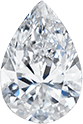
Sentiment attaches itself to outlines in odd ways, and the pear is the clearest example of a shape people choose for what it stands for rather than how it wears. Our page on why people choose a pear cut covers the teardrop story and why it puts some buyers off entirely.
Should you pick a shape for meaning or for how it wears?
Pick a shape for how it wears rather than for what it is supposed to mean, because meaning fades and daily wear does not. A cushion has rounded corners that survive knocks better than a marquise point, carries a warmer colour grade gracefully, and sits flat enough to take a wedding band beside it. Those are the things you will still be noticing in ten years.
We make 3 cushion pieces out of 68, all lab-grown with a free IGI certificate: a bezel cushion cut ring in platinum at £904, a three stone cushion cut engagement ring at £957, and a solitaire cushion cut band in sterling silver at £904. All three prices are correct at the time of writing. Our page on 2 carat cushion cut engagement rings covers what changes above a carat, and the rest sit in our cushion cut ring range.
Frequently asked questions
Does the shape you pick really mean anything?
No, not in any measurable way. A diamond shape carries no personality, no fortune and no fixed symbolism, and nobody has ever demonstrated otherwise. What a shape does carry is taste, era and a little context: a cushion looks vintage, an emerald cut looks architectural, a round looks classic. That is description rather than meaning.
Which shape reads as the most classic?
The round brilliant, by a distance. It is the shape most people picture when they hear the word diamond, it appears in 20 of our 68 rings, and it dates nobody. A cushion reads classic in a different way: older, softer, and closer to what engagement rings actually looked like before modern cutting arrived.
Does a cushion suit a vintage style ring?
Yes, better than almost any other modern shape. The rounded corners and broad facets of a cushion echo the old mine cut that vintage designs imitate, so a cushion sits naturally inside milgrain edges, filigree galleries and hand engraving. A round brilliant in the same setting can look slightly too crisp for its surroundings.
What does a cushion cut diamond say about you?
Choosing a cushion says you prefer soft outlines to sharp ones, and that you looked past the two most obvious shapes. Beyond that, nothing reliable. We stock 3 cushion pieces out of 68, so it is a genuine minority choice in our range, and that is the most honest thing the shape says about anybody.
Is a cushion cut romantic?
Yes, in the sense that most people find it so. The rounded outline and the shape’s descent from candlelit old mine cuts give it a softness that is widely read as romantic, and that association is shared rather than invented here. It is a reputation the shape earned simply by looking the way it looks.
What does your diamond shape say about you?
Nothing anybody could verify, and any article claiming otherwise is entertainment. Shape choice does reflect taste, budget and often the era of jewellery you grew up admiring. Somebody choosing a marquise, an oval and a cushion will end up with three very different rings, but you cannot read three different characters out of them.
Ready to find your perfect ring?
Explore our lab-grown diamond collection or book a virtual appointment with our team.